Showing posts with label ellison. Show all posts

Tuesday, April 17, 2012

Invisible Man, 535-end

Rioters in Harlem


Chapter Twenty-Five

What is the first thing that happens to the Invisible Man when he arrives downtown?

What is happening in Harlem? What does it mean when Ellison writes that the "crowd was working in and out of the stores like ants around spilled sugar" (538)?

What's the significance of Dupre's "'cotton-picking sack fulla stuff'"(540)?

What does the IM decide started the riot? See 540-41.

Why is the man in the building yelling "'Colored store!'" on 542?

Why do the men get oil in the store on 543?

Is the riot all about destruction? Look at the "free beer" woman on 544. Why does she keep tossing the glass milk quarts into the street?

Why do the men torch the building where "'most of [them] live'" (545)? Is this purely destructive? See 547 -- "'My kid died from the t-bees in that deathtrap, but I bet a man ain't no more go'n to be born in there.'"

Is the IM still concerned about Sybil? See 556.

How is Ras reacting to the riot? How is he dressed? How is he trying to direct the people? See 556.

What does the IM realize on 559 regarding his visibility, even to Ras and his people? What does this lead him to do to Ras?

Where is the IM trying to get to by 561? Why?

Does the men's story on 561-64 confirm the IM's verdict on his visibility on 559? Was his stand against Ras even visible?

What does the IM come to realize about his grandfather's advice on 564? Was his grandfather really "wrong"? Have things really "changed too much since his day"? Or do you think that this strategy is only one that works if you start off doing it from the beginning?


What happens to the IM on 565 when he is trying to escape from the men who want to steal his briefcase? What does he mean when he says that "'All of [them]'" are in his briefcase? What has he still not managed to get rid of?


What does the IM do to the contents of his briefcase on 567-568? What does he realize?

What happens in his hallucination? What does he realize on 571?

Epilogue


Did the IM's invisible "place him in a hole" or did it show him "the hole I was in" (572)?

After being "honest" for so long, why does the IM find it so hard by the Epilogue -- "Let me be honest with you -- a feat which, by the way, I find of the utmost difficulty" (572-73)?

What does he decide that his real problem was all along (see 573 and also 15).

Is he satisfied with hibernation or does he want to reenter the world?

Why does he ultimately decide that agreeing them to "death and destruction" is problematic in the mid-to-late twentieth century (575)? Have things indeed changed since his grandfather's day? (564)

What does the IM mean when he says that "The fact is that you carry part of your sickness within you," or that "at least [he does] as an invisible man" (575)?

Who is Rinehart ultimately on 576? Does the IM have some Rinehartian elements by this point?

Why does he stay in his hole, according to 576? What does he mean when he says that he now knows that "men are different and that all life is divided and that only in division is there true health" (576)? Does the world outside accept division or does it try to eliminate it, according to the IM? See 576-77.

What does the IM do to Mr. Norton? Why?

Why does the IM (and presumably Ellison) write? See 579-80.

What part of himself drives him out of hibernation? See 580-81. What is perhaps his "greatest social crime"(581)? Why might hibernation be a crime, even for an invisible man?

Thursday, April 12, 2012

Quiz 5 Questions

Questions about Invisible Man generated by the class.

Tuesday, April 10, 2012

Invisible Man, 462-534 -- cancelled

Invisibility

Join up with a group (1, 2, or 3) and examine a chapter of the novel (Group 1 will examine Chapter 22 -- the Brotherhood's reaction to Tod Clifton's funeral; Group 2 will examine Chapter 23 -- Ras, Rinehart, and Hambro; and Group 3 will examine 24 -- yessing them to death -- Sybil and the escape towards Harlem).

In examining each section, create a list of AT LEAST 5 questions similar to prior lists posted on this blog and have one group member submit it in a comment along with a listing of all of your names. This will count a as a qualifying blog comment for all involved. It will also make it easier for you to get another qualifying comment by responding after class to the questions you developed.

Suggestions:
Chapter 22  (Group 1) -- consider why the Brotherhood members act the way that they do. Pay especial attention to their reactions to the IM's use of his "personal responsibility," why they resent Clifton being made a hero or martyr, and the significance of Brother Jack's eye.

Chapter 23 (Group 2) --  consider how Ras challenges the IM to speak for the Brotherhood, especially in light of the Brotherhood's reaction to the IM, why the IM initially chooses to disguise himself and what his disguise reveals to him. Also, who is Rinehart? Any questions involving Rinehart should be more specific than this one. What does Hambro tell the IM to do? What does he decide to do on his own and why?

Chapter 24 (Group 3) --  How does the IM go about his plan? Is he successful? What does Sybil want? How does the IM react?

Thursday, April 5, 2012

Invisible Man, 409-461


First, a bit of backtracking: 

The Cast-Iron Figure
- Sam pointed out that this figure is a bank full of coins. Why does it upset the IM so much? Why does he break it -- turning it into a "broken image" (332)? Why does he take it? Why is everyone so suspicious of his attempt to get rid of it? 319-332

The First Brotherhood Speech
- What is the IM talking about? Why do the people respond so favorably? Why does the Brotherhood resent his speech?

Ras
- Another question raised in Tuesday's presentation: Is Ras crazy or wrong? (370-376) Is Clifton swayed by his arguments?

Mixed Agendas
How does the IM describe his time in the Brotherhood? Look particularly at his description of his success on 380-81. 

The Mysterious Note
Who do you think wrote the note that the IM receives on 383? How does the message affect him?

Brother Tarp
- What role does Brother Tarp assume in the IM's life? Consider his gift of the picture of Douglass on 378 (also 381) as well as the chain link (386-90)
- What might be the significance of his appearance on 384? (Also see 389-90). 
- Why is Wrestrum so upset by the link? (392-93) What does it lead him to say to the IM? What does it lead him to do?

The Woman Question 
- How do the women react to the IM? See 409-10, 420 and chapter 19 in general.
- What does it mean to be a "salvationist"? Is the woman he goes home with really interested in learning more about the party's politics? (410-15), especially the definition on 410, her reflection on 412 that "Life is so terribly empty and disorganized" without an ideology to stick to, etc. 
- Do you think the situation with the woman is a trap or test (as the IM fears)? 415-420.
- What's the deal with the woman's husband? Why doesn't he react to seeing her in bed with the IM? Does he really not see him? (417-18)

Tod Clifton's "disappearance" and/or funeral
- Do you think that Tod disappeared of his own will or do you think that the party discouraged or threatened him? See 421-22, 
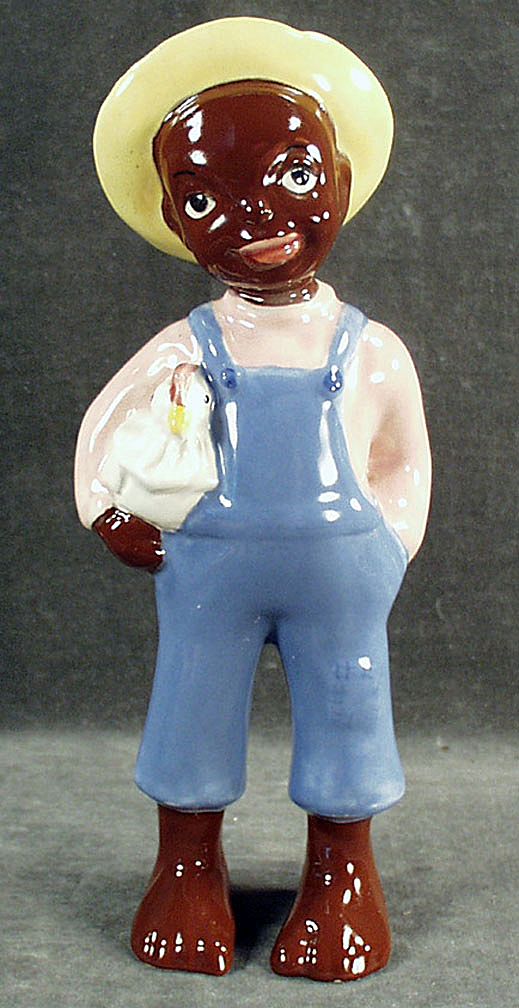
- Why is Tod selling those Sambo dolls? (431-35)
- What happens with the cop? (435-38)
- What is the significance of the doll's construction -- the way that it dances (446)?
- Why can't the IM sing like the old man with the knife welt on his throat? Why is he incapable of "arousing" the song? (452-3)
- What do you think of the IM's speech? What is he trying to say? Doeshe have anything to say?

What happens in Harlem when the IM is downtown with the women
- Why do the men at the bar get so threatening when the IM returns to Harlem? (423-27)
- Is the situation in Harlem a result of the IM leaving? Is it something else? Why was he sent out of the district? 

The Invisible Man's experience in the subway
- What does the IM think about being outside of history? Is it desirable or undesirable to be outside? (439-44)
- By extension, what opportunities does the Brotherhood seem to offer African Americans? (439)
- Why does the IM follow the "boys...in their well-pressed, too-hot-for-summer suits" (440-442)? 
- How does he begin to see Harlem in a new way? What does he realize about the area and about himself? (443-4)

Thursday, March 29, 2012

Invisible Man, 261-317


Chapter Thirteen

Why is the IM attracted to the yams? What is the significance of his:
-          claim that it is good just from looking at it, and the man’s advice to try it first
-          choice to eat it while walking down the street (264)
-          thoughts about shame and public actions (265)
-          accusations about Bledsoe’s chitterling habit
-          return to get more yams and claim that they are his “‘birthmark’” (266)
-          why he doesn’t think that he will be able to enjoy the hot fried pies?

What does he find when he walks away after finishing his yams? How does it make him feel? (267-75)

What drives the IM to act? (270-75)

What are the points of the IM’s speech? Is it totally contradictory? Does he actually instigate the protest? (275-281)

Why does he keep repeating “‘we’re a law abiding people’” while people are trying to break the law? Does the phrase take on different meanings throughout his speech, particularly once people start to act (straight vs. sarcastic, etc)? See 275, 276, 277, 279, 281.

Why is he so surprised when the police show up (bottom of 282-284)?

Who do you think the people calling him “brother” are?  See 282: When he asks them who they are, they answer  “‘friends of allthe common people’” who “‘believe in brotherhood.’” Can you answer the IM’s own question – “Where had I heard of them?” 

Did he mean to “‘mov[e] them to action,’” as the white woman claims on 284? See his reflections on 286.

What does he notice about the man who remarks on his speech? See 288-89.

What does the man mean about old people – both individuals and “‘types of men’” (291)? If old people are so bad, what does he mean when he tells the IM that he has become “‘capable of rising to the necessity of the historical situation’” because “‘History has been born in [his] brain’” (291).

Why does the man get frustrated by the IM’s comments on race (292)? Why does he claim that the IM cannot be “‘such an individualist as [he] pretend[s]”?

Chapter Fourteen

What causes the IM to rethink his rejection of the man’s offer? (296-98)

What is the meaning and relevance of the word Chthonian? (299)

Where is the IM? Who are the people he is with?

If the Founder is not Booker T. Washington, who is he? (305-7) He “‘lies outside history’” while Washington “‘is still a living force’” (306). Is there a right and a wrong way to engage history? Brother Jack suggests that in “‘times of indecision when all the old answers are proven false, the people look back upon the dead to give them a clue.’” Do you think that this is the right approach, given his earlier disdain for old attitudes? There is “‘little the dead can do’” but they are not “‘absolutely powerless.’”

Why will Mary not do as a landlady (308-9)? Why is the IM given a new identity (309)?

What is the IM’s private attitude towards Booker T. Washington (311)?

What happens during the singing incident on 312-314? Why does the IM’s reaction dispel the tension – rendering them “‘an importance service which I couldn’t understand’” (314)?

What does dancing with Emma fulfill for the IM? Is he comfortable? Is this freedom? (314-15).

What does he admit that he dislikes about “people like Mary on 316-17?

Monday, March 26, 2012

Invisible Man, 172-260


For Quiz #4, answer five (5) of the following questions.

Four (4) of your questions must come from EACH ONE of the chapters (answer 1 question from Nine, 1 from Ten, 1 from Eleven, and 1 from Twelve). One (1) question can come from any chapter. Answer this question wherever it fits (based on chapter order).

Reminder: IM = Invisible Man


Chapter Nine

How does IM interact with the blueprint cart-pusher? What is noticeably missing from the IM's side of their interaction? What does it mean to “deny” someone (173)? And why does the cart-pusher remind the IM of “the vet from the Golden Day” (174)?

What does IM say that leads the cart-pusher decide that he is “‘kinda young’” on 175?

Why is IM so resistant to people recognizing that he is southern, especially the counterman who offers him the pork chops and grits (178)?

What’s the deal with Mr. Emerson’s son? The Club Calamus?

Why did Bledsoe write those letters? (190) And why did IM think it was a good idea to ask for them again? (148-9)

What is the significance of the “Poor Robin” song? Who does what to whom in the song? Who is responsible, and for what? (193-4) How do these lyrics reflect IM’s outlook on his life and new job as expressed on 195?


Chapter Ten

What is the first tension that the IM encounters at Liberty Paints? What is the “new racket” at the plant? (197) What does it mean to be a “scab?”

What goes wrong with Kimbro? Whose fault is it? (199-206)

What responsibilities does Lucius Brockway have at Liberty Paints? Where do they start and end? (207-218, 224-230)?

Who are the men in the locker room? Why do some of them call the IM “'brother'” and why are others so suspicious of him? What is a “'fink?'” (219-223).

What are the racial tensions at the plant suggested by this meeting? Why are the men so suspicious of Brockway? Does it have anything to do with his race? 

What goes wrong with Brockway? Whose fault is it this time? (224-30) Why is Brockway so concerned about the union (228)?

Does IM make significant progress with Brockway through and after their fight? Do you think that Brockway really laughs as he scrambles for the stairs on 229? Do you think that the IM has really "lost irrevocably an important victory" (229)? 


Chapter Eleven

Where does the IM wake up? What procedure is being tried on him? (232)

What does the doctor suggest that he has done on 236? What effects on IM’s personality should follow? Wasn’t his body injured and not his mind?

What happens when the IM tries to be angry on 237?

Why does the doctor show him the cards asking “WHO WAS BUCKEYE THE RABBIT” and “BOY, WHO WAS BRER RABBIT?” How does the IM react to these questions (241-242)?

How does the IM feel about the changes in his personality (249)?


Chapter Twelve

Who is Mary Rambo (252)? What does she want for the IM? (255)

Why does the IM feel totally out of place at the Men’s House (256)? What does he do to the man who resembles Bledsoe on 257? Why?

Looking back on his experiences, how does the IM feel? His plans have all changed and he swore that the point of life was sticking to one's plan when he first arrived (259).

Tuesday, March 20, 2012

Invisible Man, 98-171, Blog Posting In-Class Assignment

Harlem

You will be assigned to a group. Divide up the questions among yourselves and answer one or two of the questions from the chapter assigned to your group in an INDIVIDUAL blog comment.


In order to be a qualifying comment, your comment MUST BE 150+ words - you can include quotes. 

It is okay if more than one person answers the same question, but try to make sure that all questions have at least one answer. 

Then regroup and discuss your answer(s) and chapter(s) before reporting back to the class.

Not only does this earn you the first of six required blog comments (and more if you get into a discussion on the blog after class), but it gives you a solid background for Quiz #4 (Tuesday 3/27) and potentially a starting point for Close Reading #2, due on Sunday 4/8.

NOTE: Group 1's questions carry over from Tuesday's reading, 98-135.

Invisible Man - Group 1 - Chapters Four & Five (98-135)

1. What is so attractive about Bledsoe and the founder for IM? What does the IM want out of life at this point?


2. Why is IM surprised by Bledsoe’s attitude toward Norton? See 102-3 and 105-6. What does he expect?


3. How does Mr. Norton feel about IM after all is said and done? Why do his eyes keep narrowing on 108? 

4. Is the school really a product of combined southern black agency and northern white generosity or a more complicated relationship between races and regions? Are blacks really given everything by the whites as IM originally figures (112) or does something much more complicated underlie Barbee’s speech? Recall Norton’s admission that he “know[s his] life rather well” (38) but admits he is unsure whether the vision for the school was only the founder’s or also his own (39)?

5. Do you think that the IM is to blame for his actions or do you think that he is just incredibly naive and sometimes thinks too late (if at all)? Recall the vet's observation about the IM on 94 -- "'He registers with his senses but short-circuits his brain. Nothing has meaning. He takes it in but he doesn't digest it. Already he is -- well, bless my soul! Behold! a walking zombie!...The mechanical man!'"

6. Why do you think the IM so attached to the school? As you know, he keeps thinking about it and wanting to go back no matter where life leads him.

Invisible Man - Group 2 - Chapter Six (136-150)

1. Is IM in trouble because he listened to Norton? What does Bledsoe suggest that he should have done instead? (138-9). Pay attention to Bledsoe's responses to the IM's excuses on 139.

2. What is the importance of appropriate lying according to Bledsoe? See 138-9.

3. Do you think the IM believes the vet’s story (140)? What does Bledsoe think of the vet's claim that the IM thinks “white is right”? If Bledsoe finds it true, why does he say that the vet “‘should be under lock and key’” (140)? Do you think Bledsoe would say that IM's grandfather should also be under lock and key if he had openly stated his dying words earlier in his life?

4. Do you think that the IM really ruined (or almost ruined) the institution or his future (140-41)?  Would you kick him out of school? Why or why not?

5. Where does Bledsoe’s power come from and how far does it extend? Does he give an accurate assessment of his own power and the men he has in his power or does he overstate it? (142-4) Why does he suggest that pride and dignity are “foolish and expensive and a lot of dead weight” (145)?

6. Is the IM’s unwillingness to accept responsibility for what he has done willful at this point or is it just a sign of his immaturity (see 146-7)? Either way, why does he realize that he must choose between the life of the Bledsoes of the world and his grandfather? Is this really even a choice?

7. Why does the IM (bless his heart) think it is a good idea to ask Bledsoe for letters of recommendation (148-9)? 

Invisible Man - Group 3 - Chapters Seven and Eight (151-171)

1. What is the difference between the vet, the IM and Crenshaw? What are each of them willing (or unwilling) to recognize about themselves and their lives or fates (152-6)

2. What is the vet’s advice to IM? (153-6) What does it mean to “Be your own father?” (156) Does his advice resonate with Bledsoe’s or IM’s grandfather’s or is it an alternative to both? How so?

3. What does IM think of Harlem at first? (157-61) Why is he so afraid of riots?

4. What are the IM’s aspirations for his time in New York? (163-64) What do they all center around?

5. Why is IM so interested/worried/intrigued by the idea of being watched (165)

6. Do you think that the IM is making the most of his opportunity/freedom in the North?

Monday, March 19, 2012

Invisible Man, 3-135

The statue of Booker T. Washington at Tuskegee Institute (now University)


"Then in my mind's eye I see the bronze statue of the Founder, the cold Father symbol, his hands outstretched in the breathtaking gesture of lifting a veil that flutters in hard, metallic folds above the face of a kneeling slave; and I stand puzzled, unable to decide whether the veil is really being lifted, or lowered more firmly in place; whether I am witnessing a revelation or a more efficient blinding" (36)

A few things to consider and discussion questions for Tuesday's reading (3-135)

Prologue


1. How is the Invisible Man (IM) invisible? How does his invisibility function? Does he desire to be seen?

2. In particular, how does his invisibility function  in the scene of violence (the "mugging") with the tall blonde man on 4-5?

3. Is invisibility more dangerous than sleepwalking, or vice versa?

4. Where is the IM when we meet him? What is significant about his location and "hibernation" (6)?

5. Why does he desire light so much? Is there a hidden meaning lurking in the name "Monopolated Light & Power?" (7, 13).

6. What the heck happens after he smokes that reefer and listens to Armstrong's "What Did I Do to Be So Black and Blue"? (8-12)

7. What does invisibility have to do with (ir)responsibility? Who is responsible for making the IM invisible? Did he choose to become invisible? Why, why not, or in which ways?

8. Whose/what interests are the "higher interests of society"? Is it better (or safer) to be awake or dreaming?

Chapter One


1. In the prologue, the IM suggests that the world operates through contradiction. You think things will go in one direction, but they end up flying right back at your head: “Not like an arrow, but a boomerang. (Beware of those who speak of the spiral of history; they are preparing a boomerang. Keep a steel helmet handy.) I know; I have been boomeranged across my head so much that I now can see the darkness of lightness” (6).

So what is the meaning of boomeranging or being boomeranged?

Consider the first lines of chapter one: In his search for himself, he accepts the answers that others give him, “though they were often in contradiction and even self-contradictory. I was naïve. I was looking for myself and asking everyone except myself questions which I, and only I, could answer. It took me a long time and much painful boomeranging of my expectations to achieve a realization everyone else appears to have been born with: That I am nobody but myself. But first I had to discover that I am an invisible man!” (15).

2. Before Spring Break, I dropped a few suggestions about shame. What role does it play in his (changing) attitude on slavery and his ancestors' (namely his grandparents') past? (15)

3. You should have noticed some echoes of an earlier reading assignment throughout this chapter. Which assignment? What is the significance of it here? 

4. What does IM's grandfather communicate in his last words (16-17)? Why is his final lesson so unsettling for the IM and his family? 

5. What goes on the battle royal? Why is the naked white woman with the American flag tattoo present (19)? Why does IM continue to trust and respect these figures while they violently and indirectly exploit the woman, himself, and the other students? Why do the other students go along with it? Why is Tatlock unwilling to make a deal in the ring? (24-5). 

6. See question 3 -- what's the deal with IM's speech? At least the only part of it we are presented with?

7. Is his briefcase and scholarship fairly won? Is fairness even possible? What does it say about IM that he is able to forgive the men, accept the scholarship, and is not even upset by the fact that the “‘good hard American cash’” that he has struggled for is in fact “brass pocket tokens advertising a certain make of automobile” (32)?

8. What's the deal with the circus dream? 

Chapter Two

1. Is the college really like IM initially remembers it? Or is it dried out and spread with the contents of the cistern (as on 36)?


2. (See statue above). Is this a veiling or an unveiling? Would bird poop really make this statue more commanding?

3. Is IM’s anxiety the main reason that he messes up the drive with Norton? Consider his description of his “pride and anxiety” on 37 and his embarrassment and fear of punishment for the innocent act of honking the horn. Also consider his dread that Norton will notice his “treachery” on 40.

4. What is the significance of Norton’s daughter in spurring him to support the school? (42-3).

5. What is the history of Trueblood’s relationship with the school and likely that of others of the country people who are not interested in being “uplifted” or educated, but are happy where they are? (46-7). How does IM halfheartedly try to keep Norton away from the Truebloods? “‘They – they don’t seem very bright’” – “‘but they hate us up at the school. They never come there’” (48)? Why is Norton still drawn to them?

6. What is Norton’s initial reaction to IM’s description of the Truebloods’ situation? See 50 – “‘No, no, no!’ … ‘Not that! No…’” Why is he driven on to find out more? Why is his first reaction to Trueblood himself “‘You have survived…But is it true?...You did and are unharmed!...You have looked upon chaos and are not destroyed!’” (51). What might explain Norton’s reaction that IM describes as “something like envy and indignation” (51)?

7. How do the reactions of the local whites and blacks to Truebloods’ situation differ? How does Norton react to his vivid story (see 69)? How about the IM?

Chapter Three

1. Who are the vets? What were their occupations prior to their institutionalization? Why do you think they were institutionalized? What is the background of the vet that actually helps Norton and IM?

2. How does the helpful vet's speech on 93-5 align with the condition of the IM as suggested in the prologue? How about with the dying words of the IM’s grandfather and his circus dream? Is this vet really “‘insane as all the rest,’” as Norton pronounces him (95)?

Chapter Four


1. What is so attractive about Bledsoe and the founder for IM? What does the IM want out of life at this point?

2. How does Bledsoe treat the IM after hearing the first of the incident (101-2) – consider particularly his admonition: “‘Damn what he (Norton) wants…Haven’t you got the sense God gave a dog? We take these white folks where we want them to go, we show them what we want them to see. Don’t you know that? I thought you had some sense” (102).


Why is IM surprised by Bledsoe’s attitude toward Norton? “Dr. Bledsoe’s attitude toward Mr. Norton was the most confusing of all. I dared not repeat what he’d said, for fear that it would lessen my chances of remaining in school. It just wasn’t true, I had misunderstood. He couldn’t have said what I thought he [106] had said” (104-5) – IM remembers all of Bledsoe's usual condescension and humility and yet Bledsoe speaks to Norton with a “grandmotherly concern” and “croon[s]” to him on 103. 


3. What is the significance of the grass being green and the attitudes of the other students toward the founder and the school’s mythos (105, 107)?

4. How does Mr. Norton feel about IM? Why do his eyes keep narrowing on 108? Clearly, IM does not comprehend the full meaning and repercussions of his actions at this point.

Chapter Five 

1. What is the significance of the songs performed for the visitors in light of our previous discussions of slave songs and spirituals (111)? Consider the fact that Trueblood used to perform for them as well (47). 

2. Is the school really a product of black agency and white generosity or a more complicated relationship between races and regions? Are blacks really given everything by the whites as IM originally figures (112) or is it something much more complicated that underlies Barbee’s speech? Recall Norton’s admission that he “know[s his] life rather well” (38) and that he is unsure if the vision for the school was the founder’s vision or his own (39)?

* Keep this question in mind for Chapter Six (for Thursday) -- Do you think that the Founder worked the millionaires in a similar way to the way that Bledsoe continues to?

3. Which aspects of Barbee’s speech cause the IM to “feel [his] guilt and accept it” (134). “For although I had not intended it, any act that endangered the continuity of the dream was an act of treason” (134)?